
Most homeowners treat their attic like a spooky relative—they know it’s there, but they only visit once a year to grab the holiday decorations…or something like that. This ‘out of sight, out of mind’ mentality is one of the biggest mistakes you can make. Your attic is the early warning system for your entire home. It’s where the first signs of trouble appear long before they manifest in your living space. To help you stay ahead of the curve, we’ve put together a specialized list of roof maintenance tips that rely on your five senses. You don’t need a contractor’s license to spot a problem; you just need to pay attention.
What Do You Smell?
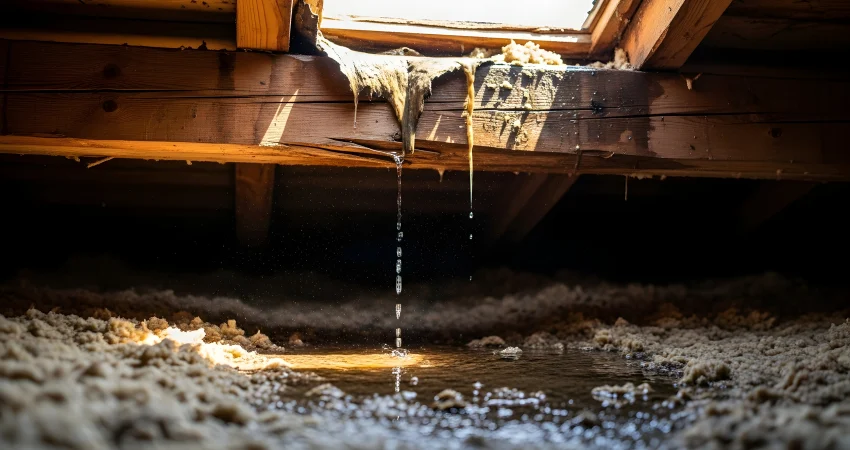
The first thing you should do when you open your attic hatch is take a deep breath. A healthy attic should smell like… well, nothing. It should smell dry and neutral. If you’re greeted by a heavy, musty, or earthy odor, you’ve got a moisture problem.
This smell is often the ghost of a leak that happened weeks ago. In the tight, dark confines of an attic, damp wood and wet insulation are the perfect breeding grounds for mold and mildew. If you smell something sour or rot-like, it’s a sign that your ventilation is failing. The air isn’t moving, and the moisture is stewing. This is one of the most critical roof maintenance tips: the nose never lies. If it smells like a basement, something is wrong with your roof.
What Do You See?
Wait for a bright, sunny afternoon and head up into the attic with the lights off. Look toward the eaves—where the roof meets the walls—and along the ridge. Do you see any pinpricks of daylight?
While some specialized vents are designed to let light in, generally speaking, you shouldn’t see the sun through your shingles. If you see light, water can get in. Additionally, look at the shiners. Shiners are nails that missed the wooden rafter and are sticking out into the open attic air. If they look rusty or have white frost on them in the winter, they’re collecting condensation. This is a tell-tale sign that your attic has too much humidity and not enough airflow.
What Do You Hear?
On a windy day, sit quietly in the rooms directly below your attic. Do you hear a rhythmic slapping or clapping sound? This is often the sound of a loose shingle lifting and falling back down. Over time, the wind will eventually catch that shingle and rip it away entirely, leaving your underlayment exposed.
Another sound to listen for is a persistent hum or whistle. This usually indicates that a piece of flashing or a vent cover has come loose and is vibrating in the wind. These sounds are your roof’s way of asking for a quick tune-up before a minor loose part becomes a major missing part.
What Do You Feel?
Your attic should be roughly the same temperature as the air outside. If you step into your attic in the summer and it feels like a literal oven, your ventilation is choked. This heat doesn’t just stay in the attic; it radiates down through your ceiling, making your home uncomfortable and driving up cooling costs.
Conversely, in the winter, if you feel a distinct draft coming from your recessed lights or electrical outlets in the ceiling, your insulation is failing. You’re paying to heat your attic, which in turn melts the snow on your roof and creates dangerous ice dams.
Attic Evidence Checklist
To make these roof maintenance tips actionable, take this checklist up with you next time you go:
- Evidence of Residents: Check for droppings or shredded insulation. Pests love a leaky roof.
- Squish Test: Feel the insulation. If it’s crunchy or damp, it needs to be replaced.
- Wood Stain Check: Look for dark streaks or watermarks on the plywood rafters.
Don’t Wait for the Drip
By the time water is dripping onto your floor, the maintenance phase has passed and the repair phase has begun. Using these sensory roof maintenance tips twice a year—once in the spring and once in the fall—can add a decade to the life of your roof.
If your senses are telling you that something is off in your attic, don’t ignore it. The team at Kaz is here to provide a professional perspective. We can translate those smells, sights, and sounds into a clear plan of action to keep your home dry and your family safe. Get in touch with us today!
Related Articles: