

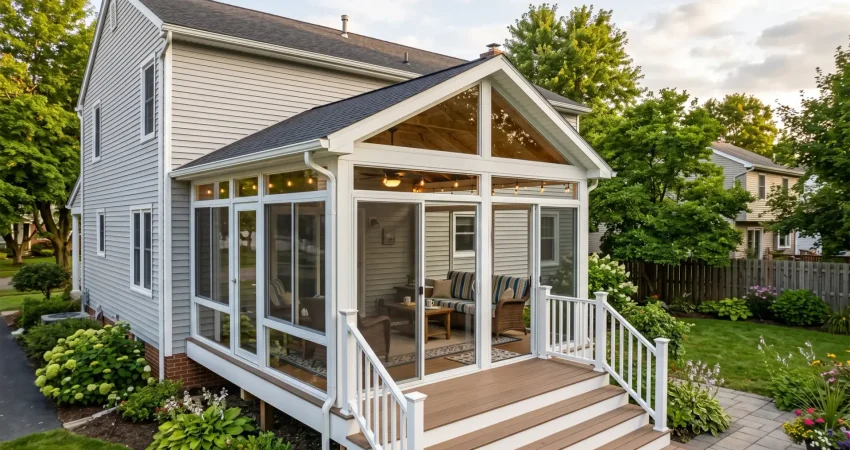
Late summer evenings are made for relaxing outside, right up until the sun starts to set. That’s when ever-annoying mosquitoes, gnats, and biting flies show up and force even the heartiest people inside. If you want to use your backyard without drowning yourself in bug spray, adding an enclosed structure to your deck or patio is the best long-term solution.
When evaluating a screened porch versus three season room addition, you need to look at how much protection you actually need from wind, rain, and cold weather. Both options keep the bugs away, but they handle local weather conditions quite differently and sit at very different price points.
The open air feel of a screened porch
A screened porch is the traditional choice for bug-free summer living. It consists of a solid roof overhead, structural corner posts, and large open wall sections covered in mesh screening.
The biggest advantage of a screened porch is unfiltered airflow. Because the walls are almost entirely mesh, even a light breeze passes right through the space, keeping the room comfortable during humid August evenings. Modern mesh options have also come a long way. High-visibility fiberglass screens give you an unobstructed view of your yard, while heavy-duty pet-resistant screens can handle dogs jumping against the frame without tearing.
The drawback to a screened porch is that it only protects you from bugs and direct overhead rain. Wind-driven rain will blow straight through the mesh, soaking your outdoor furniture and floor boards.
Pollen is another big issue in early summer. Yellow dust will cover every surface in a screened porch, requiring a thorough power-washing every spring. Additionally, once the temperature drops in late autumn, a screened porch becomes too cold to use comfortably.
Total weather barrier of a three-season room
A three-season room bridges the gap between a simple screened porch and a fully heated indoor living room. Instead of permanent open screens, a three-season room features full wall systems made of glass or heavy-duty vinyl pane windows, combined with integrated screen tracks underneath.
This window system changes how you use the space. On hot days, you can slide the window panels open completely, exposing up to 75% of the wall space to get the same breeze as a screened porch. But when a pop-up thunderstorm rolls in, you can shut the windows in just seconds. Your furniture, rug, and cushions stay dry.
The solid window barrier also keeps out spring pollen, wind, and dirt. Because you can seal the room against cold winds, a three-season room extends your outdoor living season significantly. You can comfortably sit out in the room from early spring through late fall. On a sunny, 50-degree day in October, the glass traps solar heat, creating a warm pocket without needing an expensive heating system.
Structural framing and budget differences
From a construction standpoint, a three-season room is a heavier, more complex build than a screened porch. That difference shows up directly in the project scope and total cost.
A screened porch can often be built on a standard deck frame, provided the footings are engineered to support the roof load. The floor boards can have small gaps between them for drainage, though you need to install a mesh barrier underneath the decking so bugs don’t crawl up through the floorboards.
A three-season room requires an airtight, insulated floor system. If you put glass windows on the walls, you can’t have cold wind or bugs coming up through the floor joists. Your builder will need to construct a solid tongue-and-groove subfloor with rigid foam insulation underneath.
The window units themselves also add to the material budget. A high-quality, three-season room using vinyl-pane track windows (like Eze-Breeze systems) or tempered glass panels generally costs 30-50 percent more than a basic screened porch of the same size.
Making the right choice for your backyard
Deciding between these two options really comes down to how you plan to use the space. If your primary goal is simple bug protection for summer dinners, and you don’t mind wiping down furniture after a storm, a screened porch offers a classic, cost-effective solution.
If you want a low-maintenance space where you can leave indoor-style furniture cushions out year-round, host dinners during rainstorms, and read a book in October, a three-season room is worth the extra investment. It creates a flexible buffer zone that handles whatever late summer weather throws at your house.
Ready to explore options with a new patio roof or three-season room? It’s not too late to get on the schedule for fall. Get in touch with our team today!
Related Content:
Outdoor Living: Level Up Your Patio with Furniture that Pops