
When you need to replace your siding, you’re looking at a major financial choice. It’s one of the largest investments you’ll make in your home’s exterior footprint. The two options most homeowners look at are standard vinyl panels and fiber cement boards. Both materials protect your walls from the elements, but they do it at completely different price points and with completely different maintenance schedules. If you’re looking at this as a long term siding durability comparison, you need to understand how these materials perform over twenty or thirty years, not just how they look on the day the crew finishes the installation. In fact, a thorough long term siding durability comparison helps reveal the differences that matter most for your investment.
Upfront cost versus long term return
Let’s start with the immediate budget numbers. Vinyl is the most popular choice across the country for a simple reason. It’s lightweight, easy to cut, and the installation process moves quickly. That translates to lower labor costs. If you’re working within a tight budget right now, vinyl keeps your initial expenses low.
Fiber cement is a mix of wood fiber, sand, and Portland cement. It’s heavy, requires specialized cutting tools to handle the silica dust, and needs a larger crew on site to lift and nail the boards safely. The material costs more out of the gate, and the labor costs are usually double what you pay for a vinyl installation. Both products show distinct differences in a long term siding durability comparison.
But you can’t just look at day one expenses. Fiber cement simply outlasts vinyl. Standard vinyl panels have a lifespan of twenty to 25 years before the plastic becomes brittle from UV exposure. Fiber cement easily passes the 50-year mark if it’s installed correctly. When you break down the cost per year of service, fiber cement often closes the financial gap.
Maintenance schedules and hidden work
Maintenance is where these two products drift apart completely. Vinyl is famous for being low maintenance. You don’t ever paint it because the color is baked directly through the PVC plastic material. If it gets dirty or grows algae on the north side of your house, you spray it down with a garden hose or a mild detergent once a year.
Fiber cement requires regular attention. It comes either factory-painted or primed for painting on site. While modern factory coatings last a long time, you’ll still need to repaint the house every fifteen years to protect the boards from moisture absorption.
You also have to track the caulking at the joints. Fiber cement boards don’t expand and contract much, but your home’s wood framing does. The caulk lines at the windows, doors, and corner boards will dry out, shrink, and crack over time. If you don’t scrape and replace that caulk every few years, water can get behind the boards and cause issues. If you want a hands-off exterior, vinyl wins. If you don’t mind periodic upkeep to preserve a specific look, fiber cement fits the bill. As you can see, a long term siding durability comparison highlights these upkeep differences.
Durability under real weather conditions
Weather performance matters, especially with the dramatic shifts in Western New York. Vinyl is flexible, but that flexibility depends on temperature. During freezing weather, vinyl becomes brittle. If a stray rock from the lawnmower or a heavy branch hits a cold vinyl panel, it can crack or shatter completely.
High winds can also be a problem. Because vinyl panels must be installed loosely to allow them to slide left and right as they expand in the summer sun, strong wind gusts can catch the edges, unlock the channels, and rip panels right off the house.
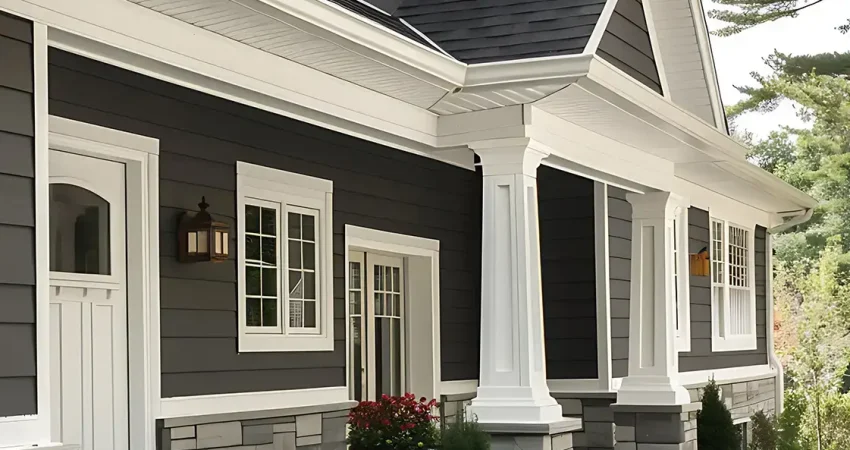
Fiber cement doesn’t care about temperature swings. It’s solid, dense, and handles impacts easily. It won’t dent from hail, and it won’t crack during a deep freeze. It’s also completely fire-resistant and insects can’t chew through it. When you’re looking at a long term siding durability comparison, fiber cement holds its structural shape and stays flat against the wall much better than plastic panels. Vinyl is usually around 0.040 to 0.046 inches thick, while fiber cement is a solid 5/16 of an inch thick. That thickness creates a deep shadow line that gives the house a more permanent, historic look.
Impact on resale value
How do home buyers view these materials when it’s time to sell? Vinyl is common, so it doesn’t usually raise or lower your home value significantly. It’s seen as the baseline standard.
Fiber cement is viewed as a premium upgrade. Buyers recognize the quality and the realistic wood-grain texture. Appraisers often give a higher value rating to homes with fiber cement because of its long lifespan and fire rating. If you plan to live in your home for the next thirty years, fiber cement gives you a permanent exterior solution. If you plan to sell the house in five years, the lower cost of vinyl might give you a faster return on your dollar without the extra investment.
Ready to explore a new look for your home’s exterior? Get in touch with our design team today for your complimentary consultation!
Related Content: