

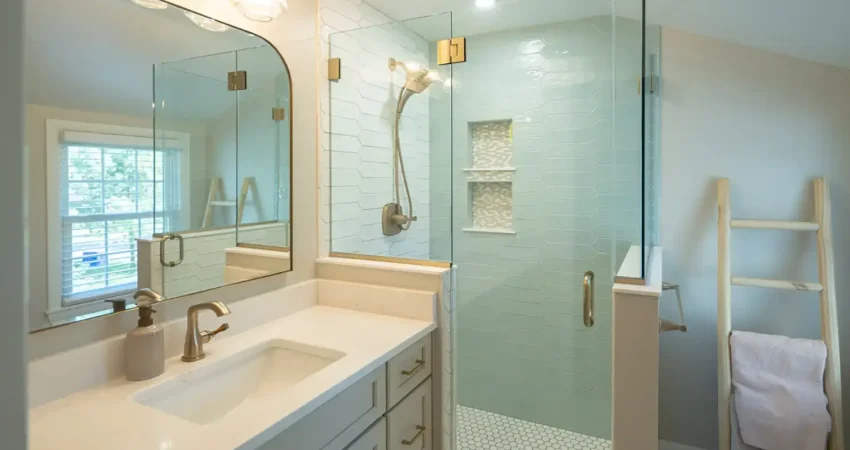
Everybody does the same math standing in their bathroom. The faucet drips. The grout around the tub has seen better decades. The vanity is original to a house built when the Sabres still played at the Aud. And the question hanging in the steamy air is always the same: what would it actually cost to fix this?
Here’s our honest answer, and the reason you won’t find a price list on our website: any number we published would be wrong for your bathroom. A 1920s Elmwood half-bath and a 2005 Amherst primary suite can share the same square footage and be completely different projects. What we can do — and what will actually help you budget — is show you exactly what moves the number, so when quotes come in, you’ll know why.
1. How Far You Go: Refresh, Gut, or Reconfigure
Almost every bathroom project falls into one of three scopes, and the jump between them is where the money lives.
A refresh keeps the footprint exactly where it’s. The tub or shower stays. Everything else gets better: a new vanity and top, new faucets, a proper mirror, layered lighting, fresh paint. It photographs like a gut remodel at a fraction of the investment — the right move when the layout works and the bones are solid.
A gut remodel goes down to the studs and back: new tile, new fixtures and valves, new vanity, new lighting, new everything, in roughly the same layout. This is the most common project we build.
A reconfigured primary suite changes the room itself — the wall that comes down, the Jacuzzi tub traded for a walk-in shower, the double vanity, the heated floor. Once plumbing drains move or walls shift, you’re in a different bracket. It’s the most transformative work we do, and the work where understanding cost drivers matters most.
2. The Five Things That Decide Where You Land
Tile scope. Tile is the quiet budget-driver because it’s slow, skilled, hand-fit labor. A simple subway pattern in a standard surround and a floor-to-ceiling large-format porcelain installation aren’t the same job, even though both are “tile.” More square feet, intricate patterns, and tiny mosaics all multiply labor days.
Moving water. Relocating a toilet or a shower drain means opening floors and reworking waste lines. In a Buffalo ranch on a slab, that’s concrete work. It’s doable — we do it regularly — but it’s one of the biggest single leaps a project can take.
The age of the house. Western New York’s housing stock is old and charming and full of opinions. Plaster walls instead of drywall. Cast iron drains. No shutoff valves anywhere. Older homes hide more surprises behind the walls, and every surprise is a licensed trade’s time.
The shower itself. A shower curtain costs almost nothing. A custom frameless glass enclosure, measured and fabricated for your exact opening, is a meaningful line item — and worth every penny in how the room feels. Glass size and complexity move the number more than most people expect.
What’s inside the walls. New valves, proper waterproofing, an exhaust fan that actually vents outside (you would be surprised). None of it photographs well. All of it’s what separates a ten-year bathroom from a thirty-year one — and skipping it’s the most expensive savings you’ll ever find.
3. Why Quotes Vary So Much Between Contractors
If you’ve collected two quotes and one is dramatically lower, it’s almost never the same project. The difference is usually scope: one quote includes full waterproofing and a licensed plumber, the other assumes the existing valves are “probably fine.” One includes tile labor for a complex pattern; the other priced a simple grid and hopes you won’t notice the change order.
This is the real reason to be wary of ballpark numbers. A quote is only comparable when the scope behind it’s identical — same tile plan, same plumbing work, same inclusions. When we quote, we itemize, so you can see exactly what your money is doing. If another quote can’t show you that, you don’t have a lower price. You have less information.
4. Where to Spend and Where to Save
Spend on what you’ll never see again once the tile goes up: waterproofing, a licensed plumber, quality valves, a properly vented fan. This isn’t the place to value-engineer.
Save where the eye can’t tell the difference: porcelain tile that reads exactly like marble, a well-made stock vanity dressed up with great hardware and a stone top, keeping the toilet where the toilet already is. Nobody has ever walked into a finished bathroom and asked whether the vanity was custom.
The Only Honest Price
A bathroom is the smallest room with the biggest concentration of skilled trades in your house — plumbing, electrical, tile, drywall, glass — all choreographed in about forty square feet. That’s why generic price lists are fiction: the only accurate number is one built from your actual room, your actual plumbing, and your actual wish list.
So here’s our offer: bring us the bathroom, and we’ll bring you a real number — itemized, no guesswork, no pressure. Explore our bathroom remodeling portfolio or schedule a free consultation, and we’ll walk through exactly what your space needs and what drives the investment.
Frequently Asked Questions
Why won’t remodelers give me a price over the phone?
Because an honest contractor can’t. Without seeing your plumbing, your subfloor, your electrical panel, and the condition behind your walls, any number is a guess — and guesses become change orders. A real quote requires eyes on the actual room.
Why do bathroom quotes vary so much?
Usually it comes down to scope differences hiding inside similar-sounding descriptions. Waterproofing systems, plumbing licenses, tile pattern complexity, and what’s assumed versus what’s included can swing a quote enormously. Compare itemized scopes, not bottom lines.
What’s the most expensive part of a bathroom remodel?
Labor — specifically tile setting and plumbing. Materials get the attention, but the skilled hands fitting tile one piece at a time and reworking waste lines correctly are what you’re really investing in.
Does a bathroom remodel increase home value?
A well-executed bathroom remodel is consistently one of the highest-ROI projects you can do. Buyers forgive a dated living room; they don’t forgive a dated bathroom. Just keep the choices broadly appealing rather than deeply personal.
Related Content:
From Outdated to Oasis: A Step-by-Step Guide to Your Bathroom Renovation with Kaz