

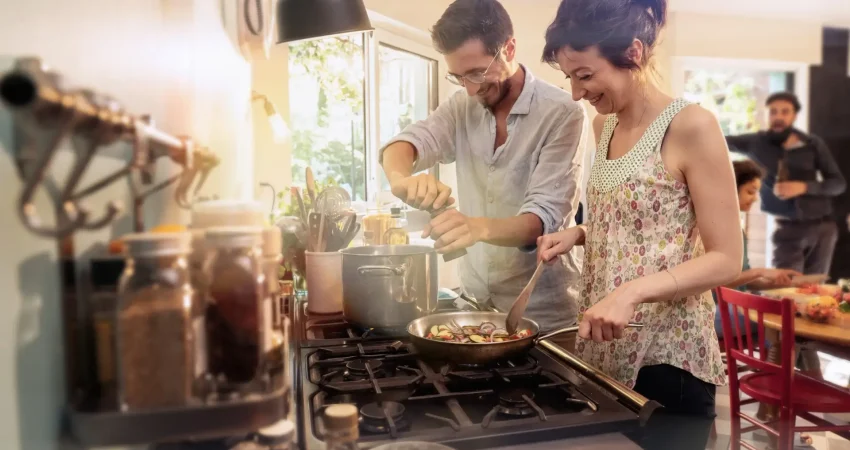
If you find yourself constantly stepping around family members or snapping at your spouse for blocking the trash bin, the issue isn’t your cooking habits. It’s your floor plan. Many people think they need a kitchen remodel because their cabinets look dated or their countertops are…ugly. Usually, the real problem is the layout. You can spend thousands of dollars on high-end finishes, but if the room’s footprint forces people to run into each other, the space will still be frustrating to use. Your kitchen should handle a busy evening without turning into a crowded bottleneck. If you’re thinking about a kitchen remodel, it’s important to look at traffic flow just as much as aesthetics.
The classic work triangle doesn’t work for modern families
For decades, traditional kitchen layout ideas relied on the classic work triangle. This rule connects the refrigerator, the main sink, and the stove with three imaginary lines. If those three points are within a few feet of each other, the layout is considered correct.
The problem is that this rule was invented in the 1940s. It was designed for a closed-off kitchen where exactly one person did all the cooking and cleanup alone while the rest of the family stayed in the living room.
Modern homes don’t work that way. Today, the kitchen is a shared social space and the hub of the house. You might have one person cooking, another unloading the dishwasher, kids constantly at the fridge (CLOSE THE DOOR!), or guests trying to chat. When you jam the fridge, sink, and stove into one tight triangle, everyone tries to stand in the exact same spot. You can’t open the refrigerator door without hitting someone at the sink. You can’t slide out the trash can without blocking the stove. It makes the space feel cramped and stressful even if the room has plenty of square footage.
Dividing your space into independent workstations
Modern kitchen design fixes this issue by breaking the room into independent workstations instead of a single triangle. You want separate areas for specific tasks so your daily paths never cross.
Start with the prep zone. This needs a long, uninterrupted stretch of countertop, ideally at least 36 inches of clear space. Put it right next to your primary water source and your trash pullout bin. You want to be able to pull a vegetable from the fridge, wash it at the sink, chop it on the counter, and discard the scraps into a pullout bin without taking more than two steps.
Keep the cooking zone entirely separate from this area. The cooking zone centers on your range, cooktop, or wall ovens. It needs its own counter space on both sides, at least 15-18 inches, so you can safely set down hot pans. This area should be completely out of the main walkway. You don’t want kids running past hot pots of boiling water to get to the back door while you’re working at the stove.
The cleanup zone handles the dishwasher, the main sink, and your everyday dish storage. Keep this away from the prep counter. That way, one person can clear breakfast dishes or load the dishwasher while someone else preps lunch, and they never have to bump elbows or swap places.
Spacing your walkways and controlling island traffic
A kitchen island is an excellent tool for directing traffic, but only if you use the right spacing parameters. Walkways are critical. A standard builder layout often leaves 36 inches of clearance around an island. That’s fine for one person moving through an empty house, but it’s too tight for a busy family.
Aim for 42 inches of walkway clearance in a single-cook kitchen. Move that up to 48 inches if two people routinely prepare meals together. That extra foot of floor space allows two people to pass each other without turning sideways or squeezing past open appliance doors.
You can also use the layout of your island to keep people out of your primary workspace entirely. Put the microwave drawer or an under-counter beverage fridge on the outer edge or the public side of the island. This creates a dedicated snack station away from the stove. Kids and guests can grab a cold drink, get a snack, or heat up food without walking into your cooking territory. They get what they need, and you get the clear space you need to work safely and efficiently.
Related Content: